Beyond the Weekly Instrumental Lesson
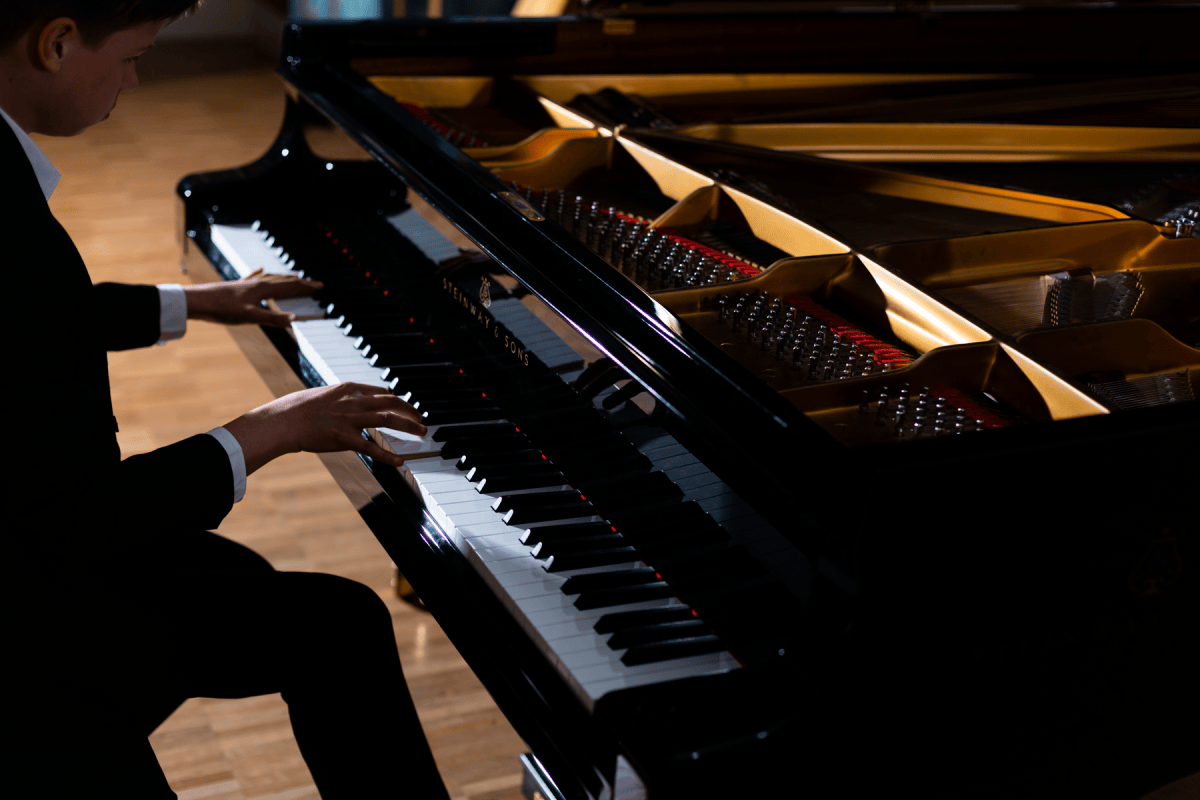
Featured photograph: Ville Lehvonen.
There are 168 hours in a week. If a student has one hour of instrumental tuition, what happens during the remaining 167 hours?
As instrumental teachers, we spend a great deal of time thinking about how to improve our teaching. We reflect on our choice of repertoire, our teaching methods, the feedback we give and the ways in which we communicate with our students.
I believe we should devote more attention to understanding and developing the conditions in which our students learn between lessons.
Much of a young musician’s development takes place in everyday life. Listening to music, observing other musicians, conversations with friends, encounters with inspiring people and participation in musical communities all contribute to learning. Much of this learning happens without us being consciously aware of it, and its effects accumulate over time. Research on informal science learning offers an interesting parallel, highlighting the educational significance of everyday experiences (Tal & Dierking, 2014).
Understanding the student’s everyday environment can help us identify both opportunities for learning and factors that may be limiting their musical development.
The learning ecosystem of a musician
I find the concept of an ecosystem particularly useful when thinking about musical learning.
The ecological systems theory developed by Urie Bronfenbrenner (1979) offers a valuable framework for understanding human development. It draws attention to the different environments in which an individual grows and to the relationships between these environments.
Drawing on Bronfenbrenner’s approach, I developed a model in 2023 to illustrate the learning ecosystem of a young musician.
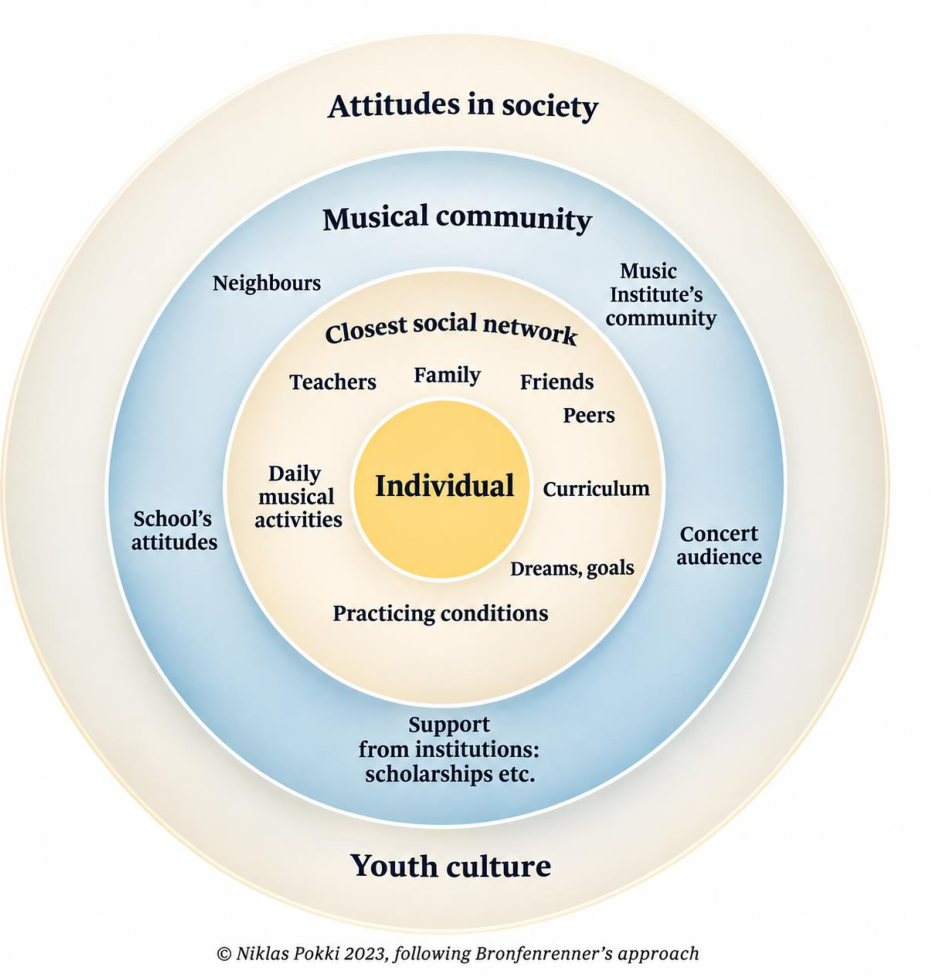
At the centre of this ecosystem is the individual, with their own interests, experiences, dreams and goals. Their musical development is influenced by a wide range of interconnected factors:
- Practising conditions: access to a suitable instrument, time, space and privacy.
- Social environment: family, friends, teachers and fellow students.
- Everyday musical activities: listening to music, reading, discussing music and exploring repertoire.
- Educational environment: instrumental lessons, curriculum, teaching methods, choice of repertoire and opportunities for ensemble playing.
- Musical community: concerts, masterclasses, festivals, music camps and encounters with other musicians.
- Personal well-being: physical and emotional health, rest and the ability to manage everyday demands.
- Wider cultural and social environment: attitudes towards music, financial resources, institutional support and opportunities for participation.
These factors interact continuously. Together, they shape the student’s motivation, musical identity and opportunities for artistic growth.
What can we influence as teachers?
We have limited opportunities to influence some aspects of our students’ lives, and we need to respect the boundaries of our professional role. Nevertheless, there are many ways in which we can help improve their learning conditions.
Sometimes a conversation with a student or their parents can reveal something essential about the difficulties the student is experiencing. A student may have very little opportunity to practise without interruptions. Another may lack contact with other young people who share their musical interests.
We can also influence the learning environment through the activities we organise around our teaching. Group lessons, opportunities to listen to fellow students, chamber music projects, shared concert visits and informal performances can all become valuable parts of a student’s musical education.
It is equally important to consider how well our teaching prepares students to learn independently between lessons. Do they know how to organise their practice, evaluate their playing and find solutions to the problems they encounter?
The long-term goal is to help students develop the ability to take responsibility for their own musical learning and artistic development.
The art of teaching includes the art of creating conditions for learning.
Building a learning community: Youth Piano Academy Finland
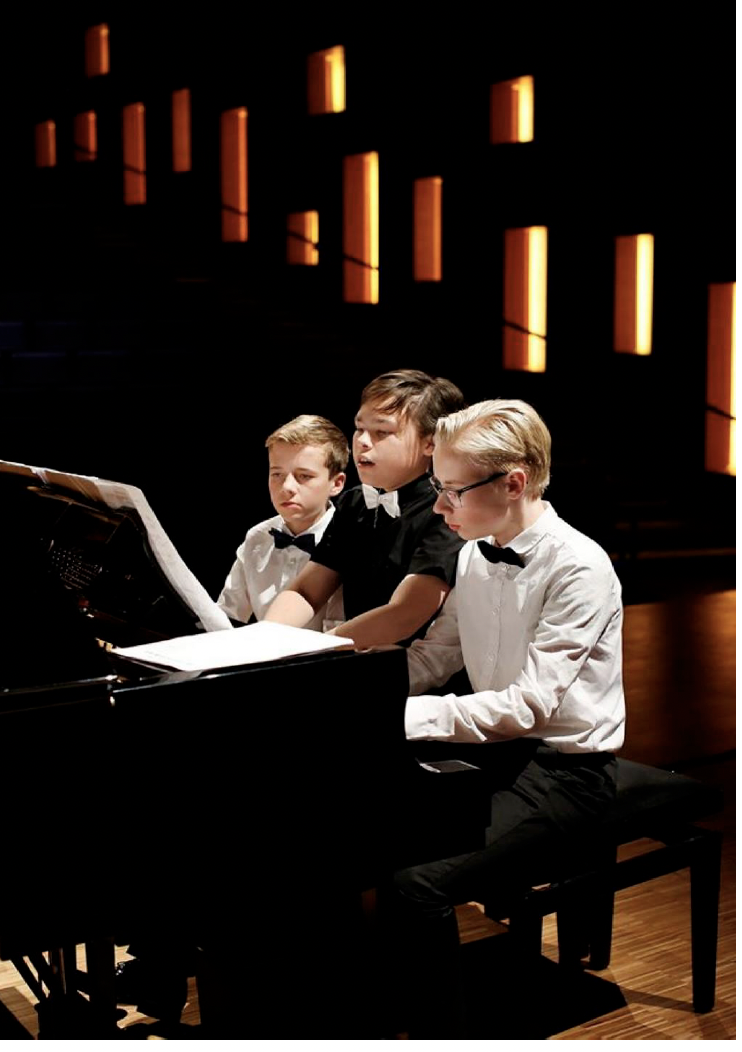
In 2013, I founded the Youth Piano Academy Finland together with my colleagues Teppo Koivisto and Antti Siirala. I have directed the project ever since.
Our aim has been to create a rich and inspiring learning environment that complements the students’ regular instrumental studies. Over the years, three features of this environment have become particularly important to me.
A stable community
The students meet regularly throughout the year, forming a community that develops over several years. Being surrounded by like-minded young people who share similar interests and aspirations is immensely valuable, particularly at an age when such peers may be difficult to find in one’s everyday surroundings.
The regular meetings strengthen the students’ sense of belonging. They become familiar with each other’s playing, follow each other’s development, exchange ideas and learn from one another. Friendships develop, and music becomes a shared part of their lives. From the perspective of self-determination theory, such a community can support the basic psychological needs for relatedness, autonomy and competence (Ryan & Deci, 2000).
Much of this learning takes place outside the organised teaching activities, through informal encounters, conversations and shared experiences.
A diversity of artistic perspectives
At each meeting, the students work with different visiting teachers. These teachers bring their own artistic personalities, musical traditions and pedagogical approaches. Their ideas and suggestions may sometimes even contradict one another.
I consider this an important part of the educational experience. Encountering different artistic perspectives encourages students to compare, experiment and evaluate musical solutions for themselves. They gradually learn to form their own opinions and take responsibility for their artistic decisions.
The ability to learn from different teachers while developing one’s own artistic identity is an essential aspect of becoming an independent musician.
Changing environments
Our intensive teaching periods take place in different locations across Finland. Each time, the students encounter new practice facilities, a different concert hall, a different piano and a different audience.
These changing conditions are educationally valuable in themselves. The students learn to adapt their playing to unfamiliar instruments and acoustics, to prepare for performances in different circumstances and to respond to unexpected situations.
Through repeated performance experiences in varied environments, they develop flexibility and adaptability. Perhaps most importantly, they gradually learn to trust their own ability to handle unfamiliar performance situations. Successful experiences in varied performance situations may also strengthen students’ self-efficacy (Bandura, 1977).
Continuity and variation
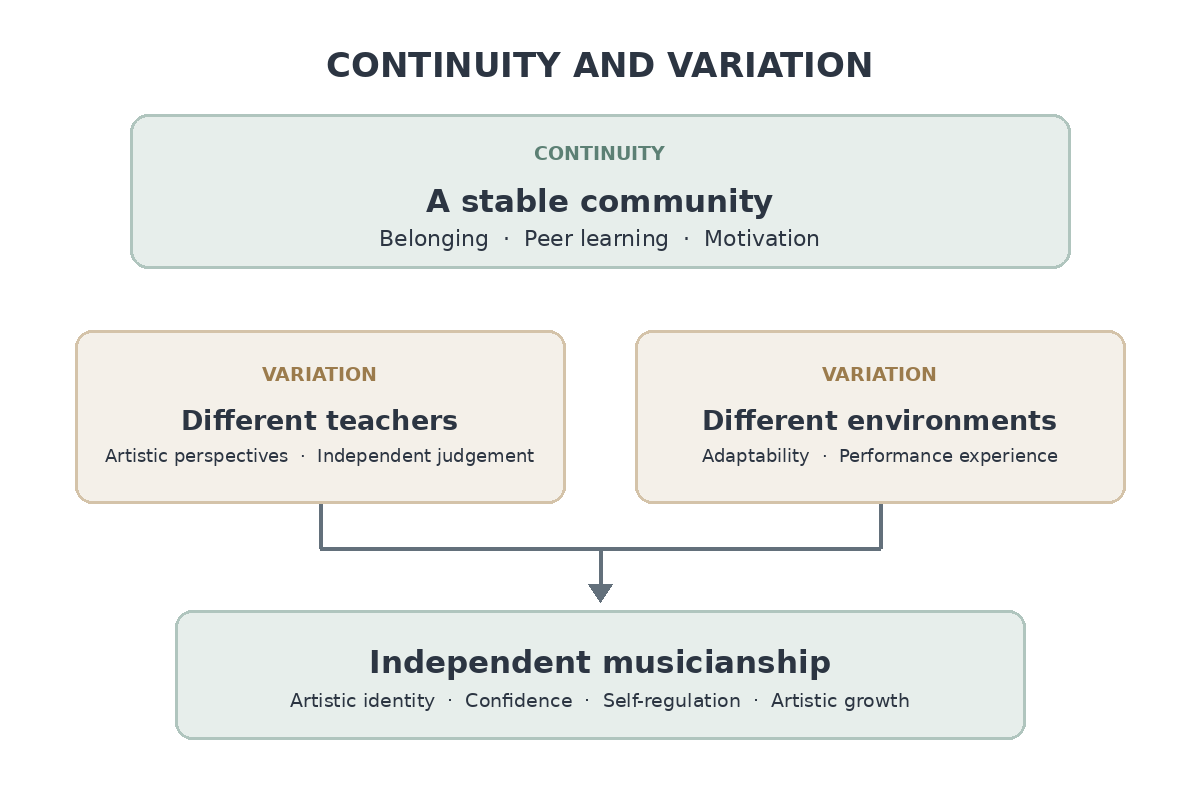
The combination of a stable social community, diverse artistic influences and changing physical environments is central to the educational model of the Youth Piano Academy Finland.
The students experience a sense of continuity and belonging while being regularly exposed to new ideas and challenges. This combination creates favourable conditions for motivation, artistic growth and increasing independence.
I think of the Academy as a learning community rather than a series of masterclasses.
Examining your own learning ecosystem
The following questions can help musicians reflect on their own learning conditions. Teachers can also use them as a starting point for conversations with their students.
1. My everyday environment
- Does my social environment and everyday life support my practising and artistic growth?
- Do I have enough time to practise?
- Do I have access to a suitable instrument and a peaceful space?
2. My practising and learning
- Is my practising purposeful, systematic and consistent?
- Do I plan my practice and reflect on what I have learned?
- Do I know how to assess and improve my playing independently?
3. Feedback and reflection
- Do I receive enough high-quality feedback from teachers and fellow musicians?
- Do I monitor my progress regularly, for example by recording and listening to my own playing?
4. My musical community
- Do I have opportunities to meet, listen to and work with other musicians?
- Do I regularly encounter music and musicians that inspire me?
- Do I feel that I belong to a musical community?
5. My goals and motivation
- Do I have meaningful long-term goals?
- Do I have musical dreams that I genuinely want to pursue?
- What could I change in my everyday life to bring myself closer to these goals?
Creating better conditions for learning
Every musician has a different learning ecosystem, and it changes throughout their life.
Taking time to examine this ecosystem can help us identify both the conditions that already support our learning and those that could be improved.
Sometimes a relatively small change in everyday life can have a considerable long-term effect. Finding a regular opportunity to practise without interruptions, attending concerts more frequently or establishing a habit of playing for fellow musicians may gradually transform the way we learn.
As teachers, we have an opportunity to help our students build environments in which their musical interests can grow and their motivation can develop. Research on interest development and young musicians’ motivation offers further perspectives on the importance of supportive learning environments (Hidi & Renninger, 2006; O’Neill, 2011).
An important part of teaching is creating the conditions in which learning can continue when the teacher is no longer present.
This article is based on my lecture Enhancing the Learning Environment for Young Instrumentalists, given at the Sibelius Academy, Uniarts Helsinki, on 4 November 2026.
References and further reading
Bandura, A. (1977). Self-efficacy: Toward a unifying theory of behavioral change. Psychological Review, 84(2), 191–215. DOI
Bronfenbrenner, U. (1979). The ecology of human development: Experiments by nature and design. Harvard University Press.
Bronfenbrenner, U. (1992). Ecological systems theory. In R. Vasta (Ed.), Six theories of child development: Revised formulations and current issues (pp. 187–249). Jessica Kingsley Publishers.
Hidi, S., & Renninger, K. A. (2006). The four-phase model of interest development. Educational Psychologist, 41(2), 111–127. DOI
Lehmann, A. C., Sloboda, J. A., & Woody, R. H. (2007). Psychology for musicians: Understanding and acquiring the skills. Oxford University Press.
O’Neill, S. A. (2011). Developing a young musician’s growth mindset: The role of motivation, self-theories, and resiliency. In I. Deliège & J. W. Davidson (Eds.), Music and the mind: Essays in honour of John Sloboda (pp. 31–46). Oxford University Press.
Ryan, R. M., & Deci, E. L. (2000). Self-determination theory and the facilitation of intrinsic motivation, social development, and well-being. American Psychologist, 55(1), 68–78. DOI
Tal, T., & Dierking, L. D. (2014). Learning science in everyday life. Journal of Research in Science Teaching, 51(3), 251–259.

